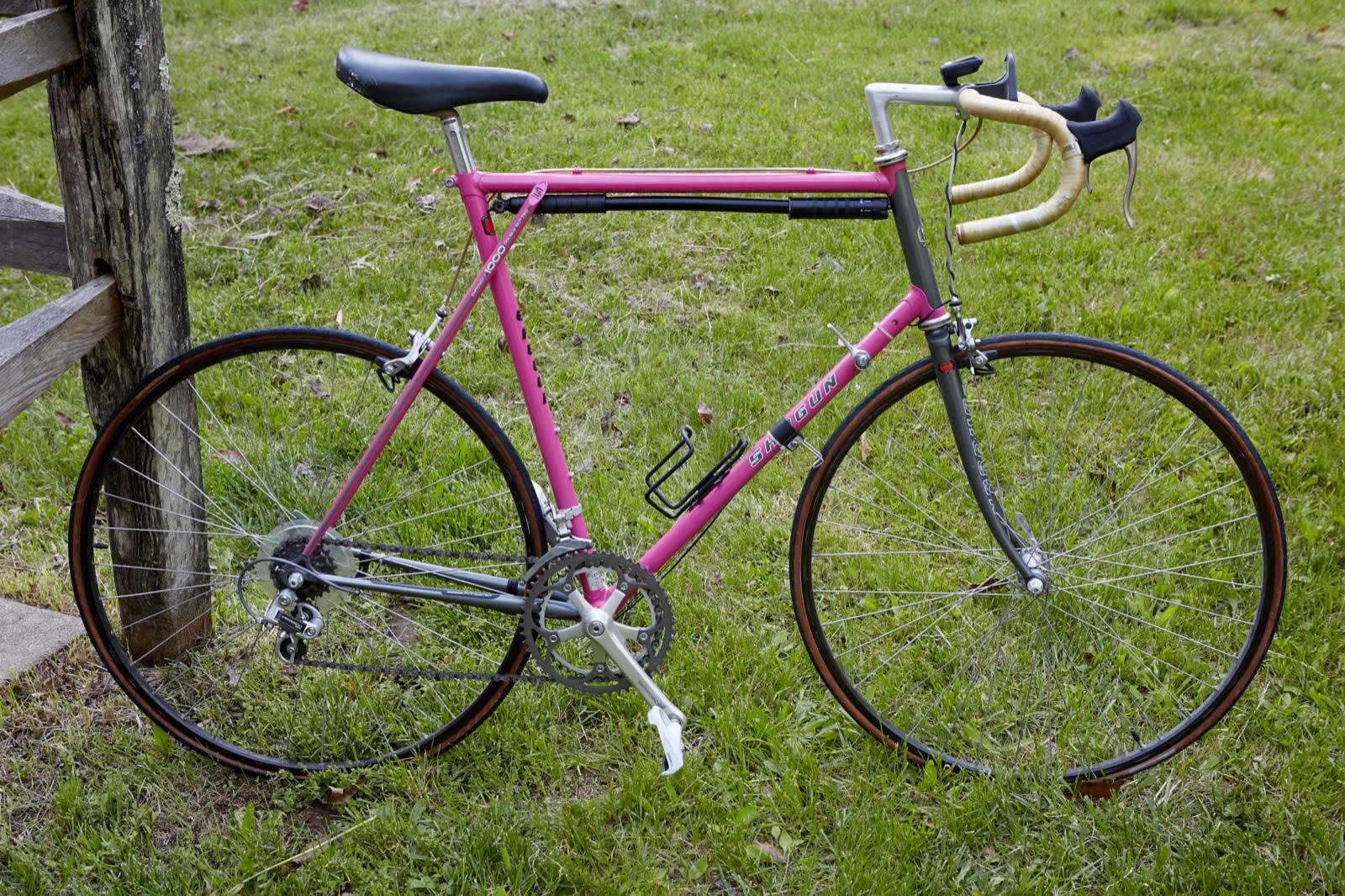
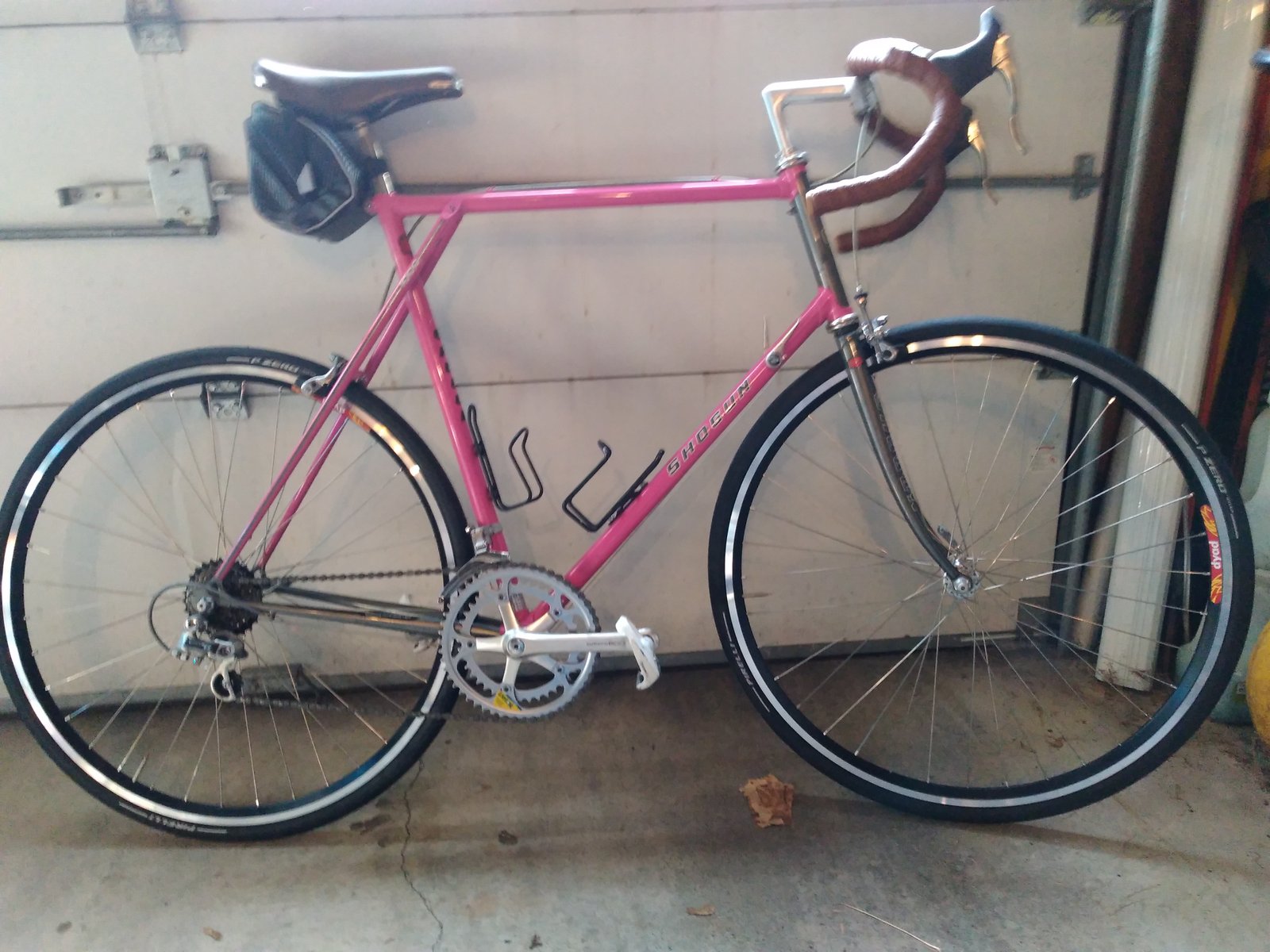
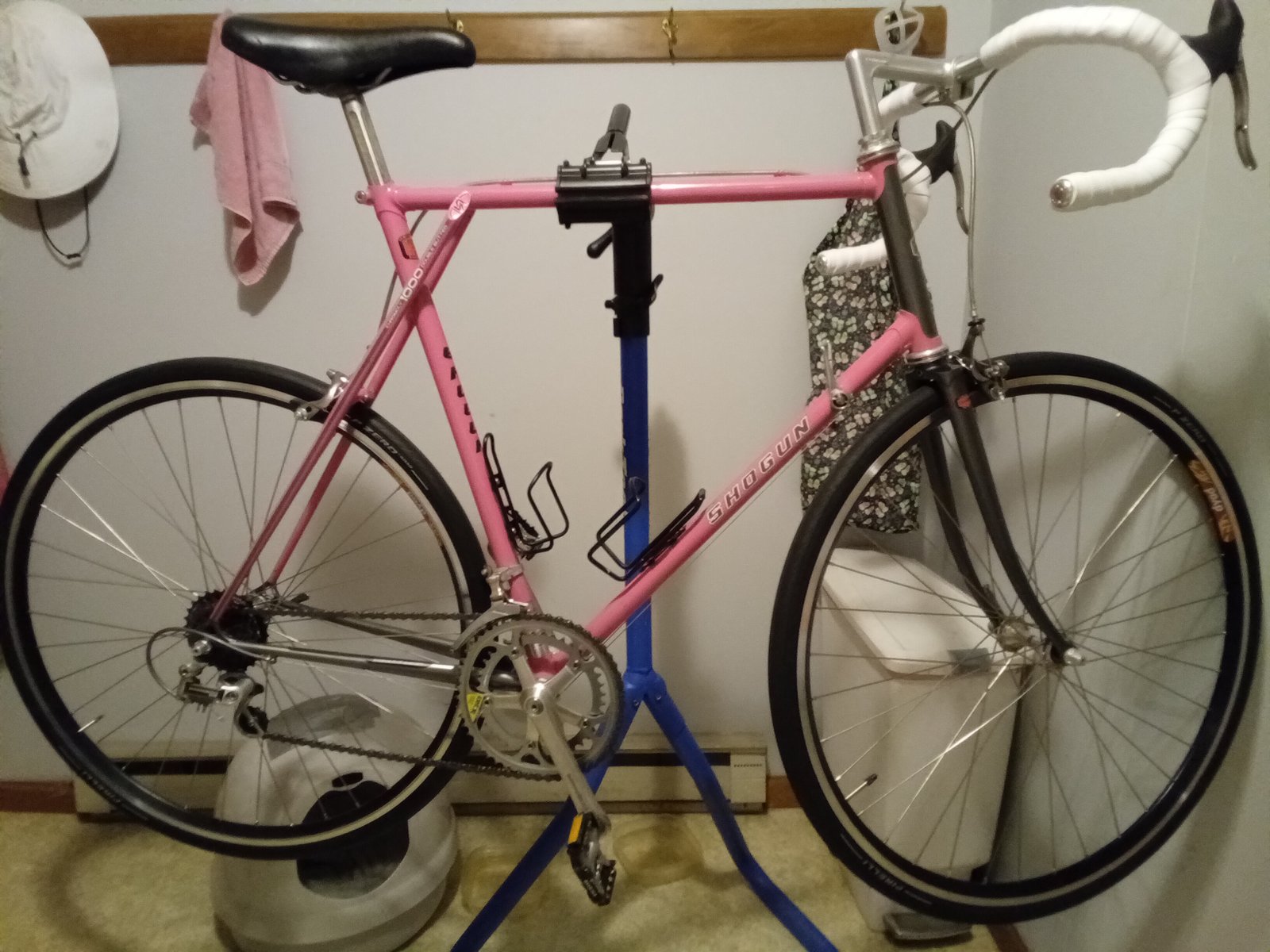
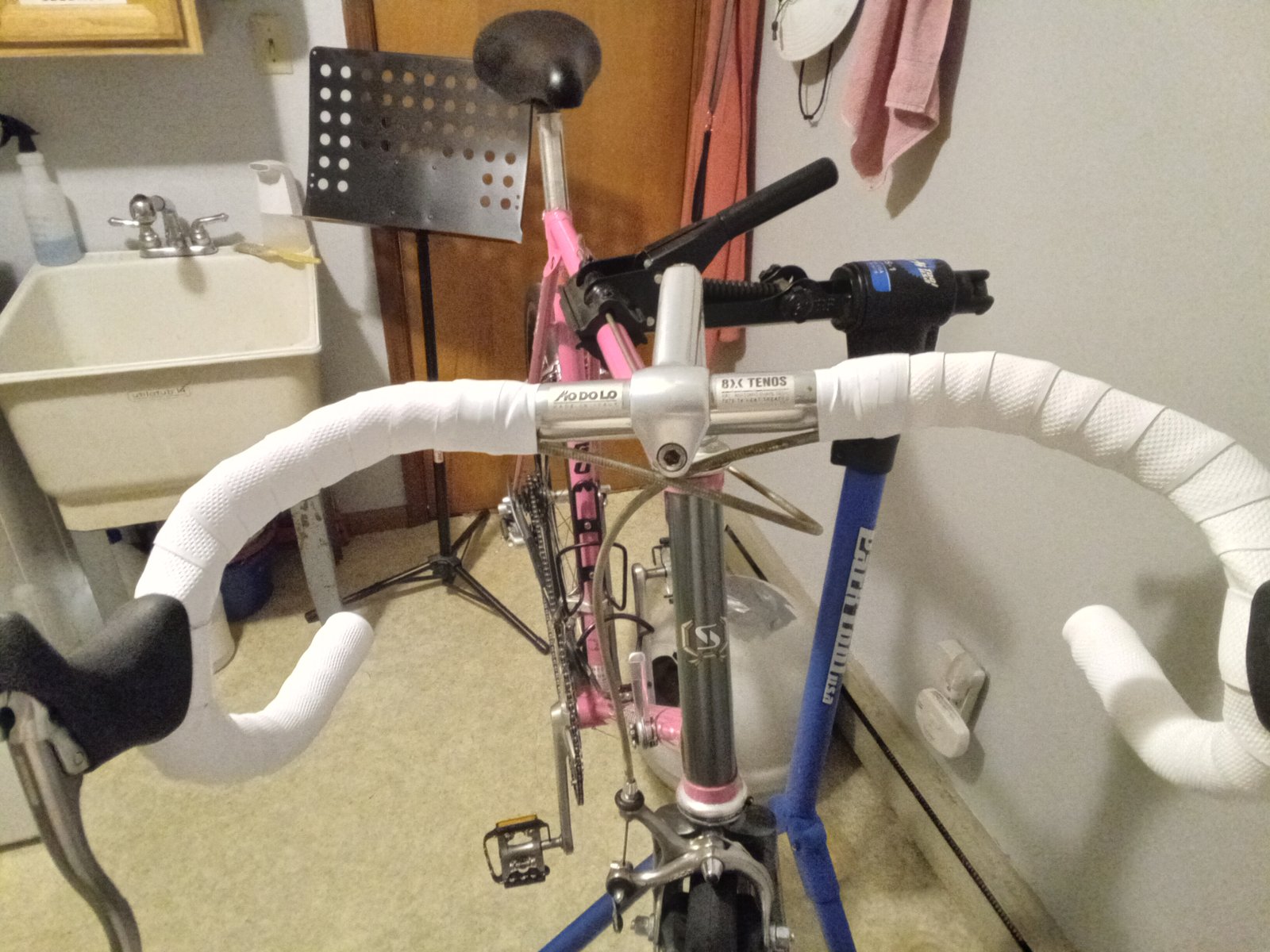
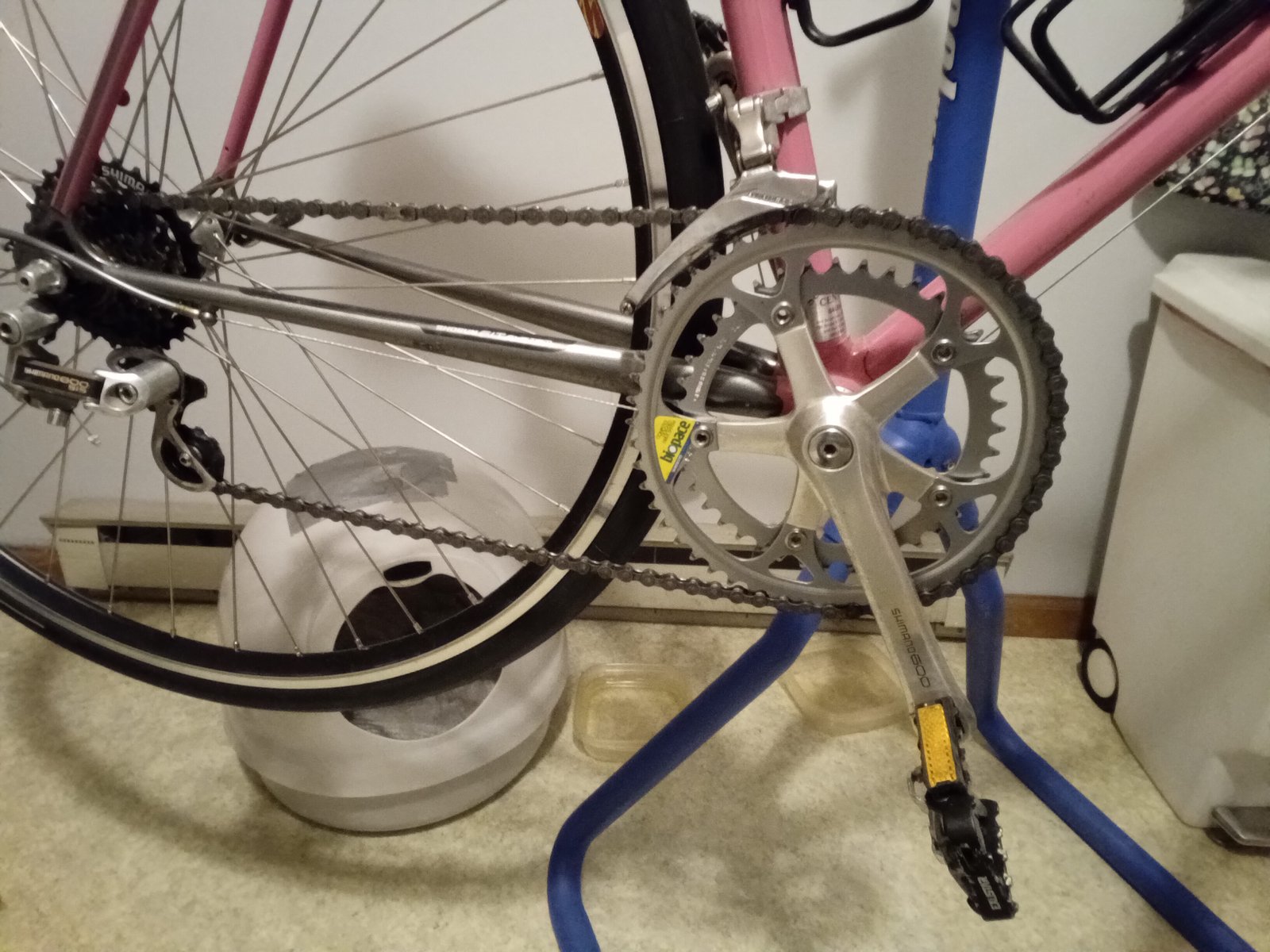
A 1986 Japanese steel racing bicycle — dormant for decades in a garage, gifted to a friend, and rebuilt for a new life on the road.
The Shogun 1000 rolled off the line in 1986 — a product of Marui Ltd., the Japanese trading company that also owned the Centurion brand. Contract manufactured by companies including Merida, Miki, Tano, and Yamaguchi, the Shogun line represented the peak of mid-1980s Japanese steel racing bicycle craftsmanship.
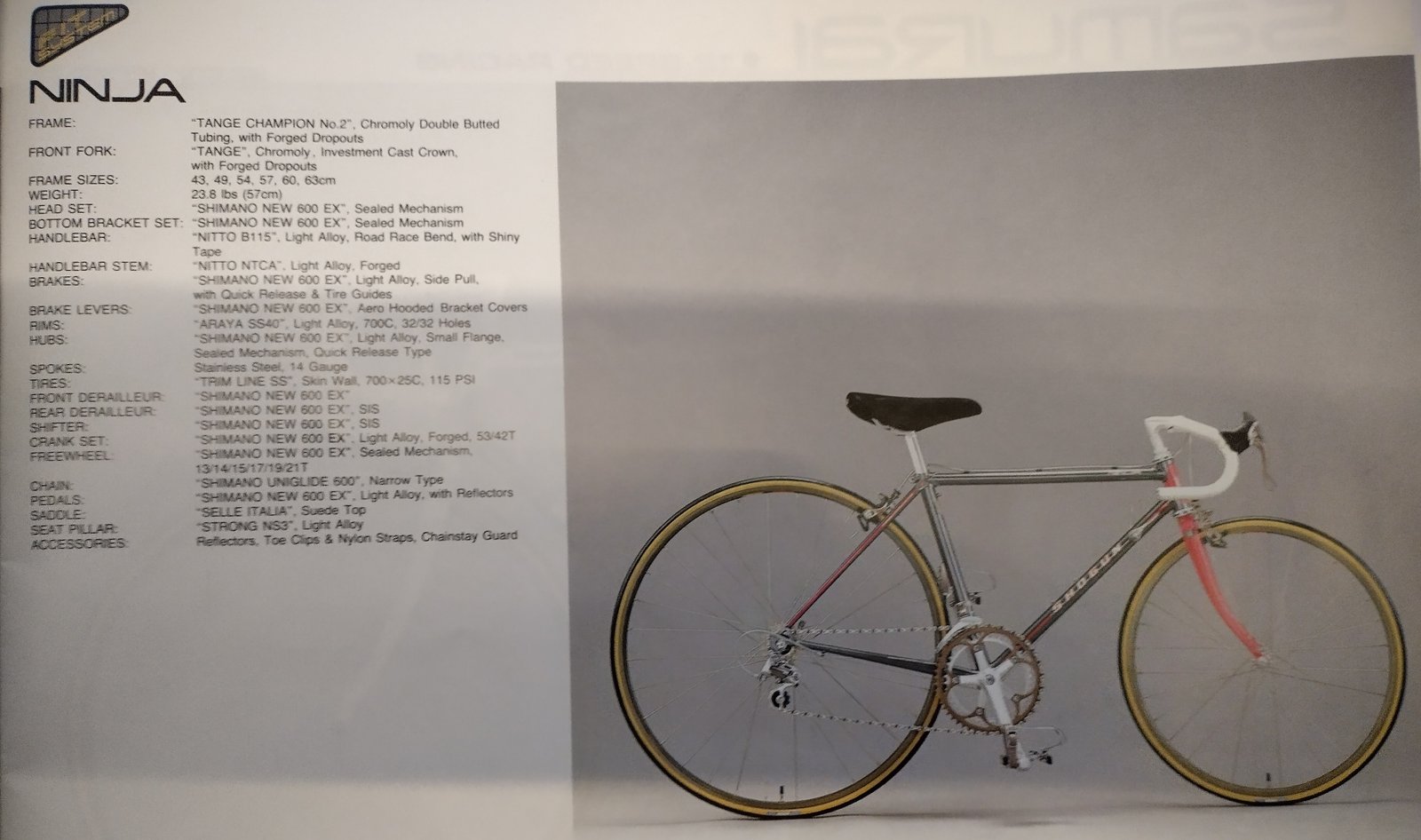
| Frame | Tange Champion No. 2 — Chromoly Double Butted Tubing, Forged Dropouts |
| Front Fork | Tange Chromoly — Investment Cast Crown, Forged Dropouts |
| Frame Sizes | 23.8″, 54, 57, 60, 63 cm |
| Headset | Shimano New 600 EX — Sealed Mechanism |
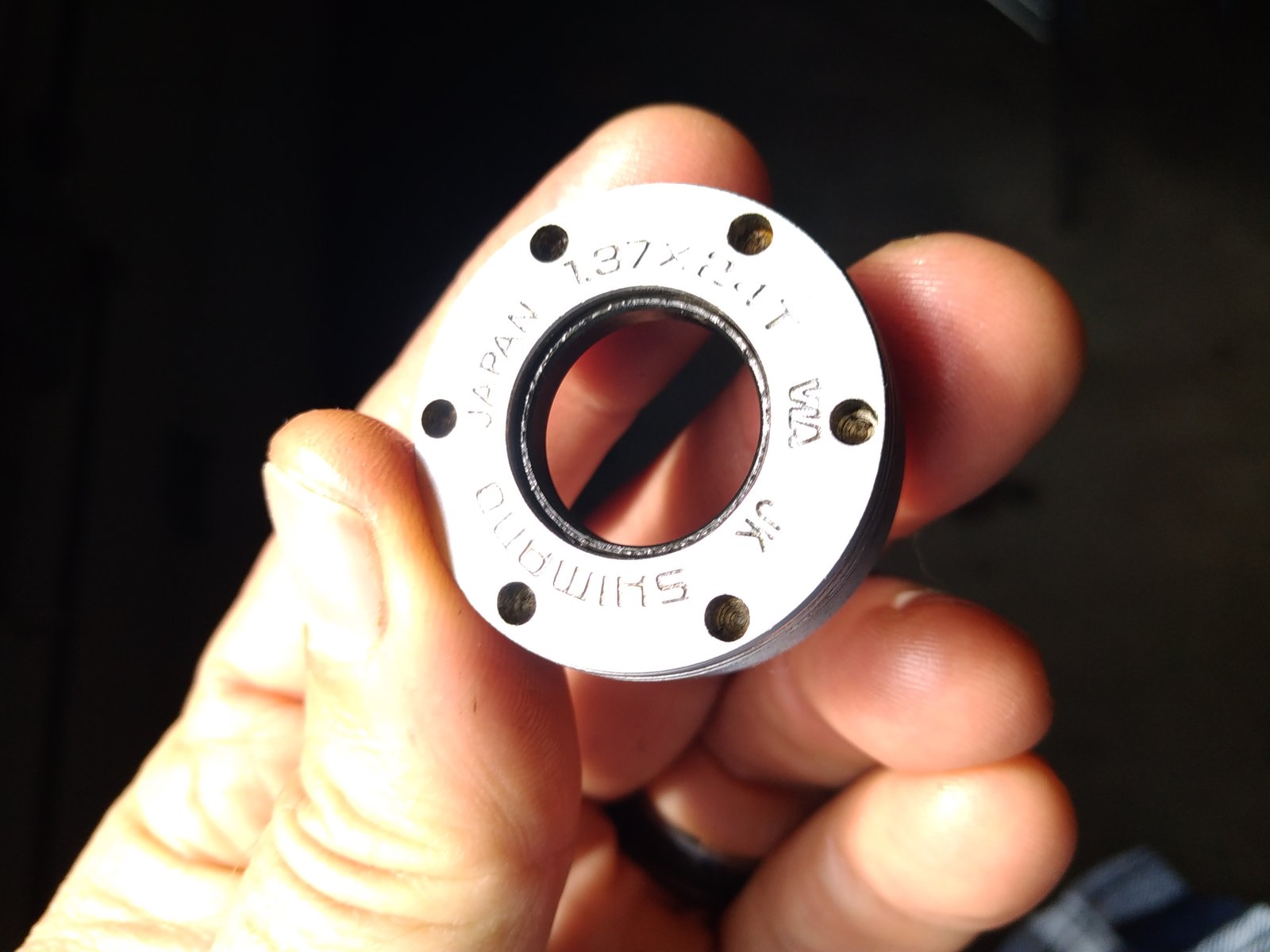
| Bottom Bracket | Shimano New 600 EX — Sealed Mechanism |
| Handlebar | Nitto B115 — Light Alloy, Road Race Bend |
| Stem | Nitto NTCA — Light Alloy, Forged |
| Brakes | Shimano New 600 EX — Aero Hooded, Side Pull |
| Rims | Araya SA-540T — Light Alloy, 700C, 32/32 Holes |
| Hubs | Shimano New 600 EX — Small Flange, Sealed, QR |
| Spokes | Stainless Steel — 14 Gauge |
| Tires | 700 × 25C — 115 PSI |
| Derailleurs | Shimano New 600 EX — SIS, Front & Rear |
| Shifters | Shimano New 600 EX — Downtube, Friction/Indexed |
| Crankset | Shimano New 600 EX — Forged, 53-42T |
| Freewheel | 13/14/15/17/19/21T — 2×6 Speed |
| Chain | Shimano Uniglide 600 — Narrow Type |
| Pedals | Shimano New 600 EX — Light Alloy, Reflectors |
| Saddle | Kashimax Intima |
| Seat Post | Sugino SP-KCL — 27.0, Graduated Scale |
The Shogun 1000 was a fully committed racing bicycle from the factory. Every component — headset, hubs, derailleurs, brakes, crankset — came from Shimano's New 600 EX groupset, the 1980s predecessor to Ultegra and the tier just below Dura-Ace. The frame was Tange Champion No. 2 chromoly, double-butted for strength-to-weight, with investment cast crown forks and forged dropouts. Nitto supplied the cockpit — the B115 handlebar and NTCA forged stem. This was a bike designed to race.
The Shogun 1000 shared its DNA with the Centurion Dave Scott Ironman series. Both brands were owned by Marui Ltd. and manufactured by the same group of Japanese factories. They used the same Tange steel tubing, the same Shimano 600 groupsets, the same Nitto cockpit components, and the same Sugino seatposts. The Shogun distinguished itself with an unusual triple-triangle frame configuration — adding a pair of stays from the seat tube junction to the rear dropouts — which made the frame stiffer than a conventional double-triangle design.
One other distinction: a half-inch shorter wheelbase, measured center axle to center axle. That makes the bike more responsive to steering input. More honest observers call it "twitchy." It rewards attention and punishes inattention in equal measure.
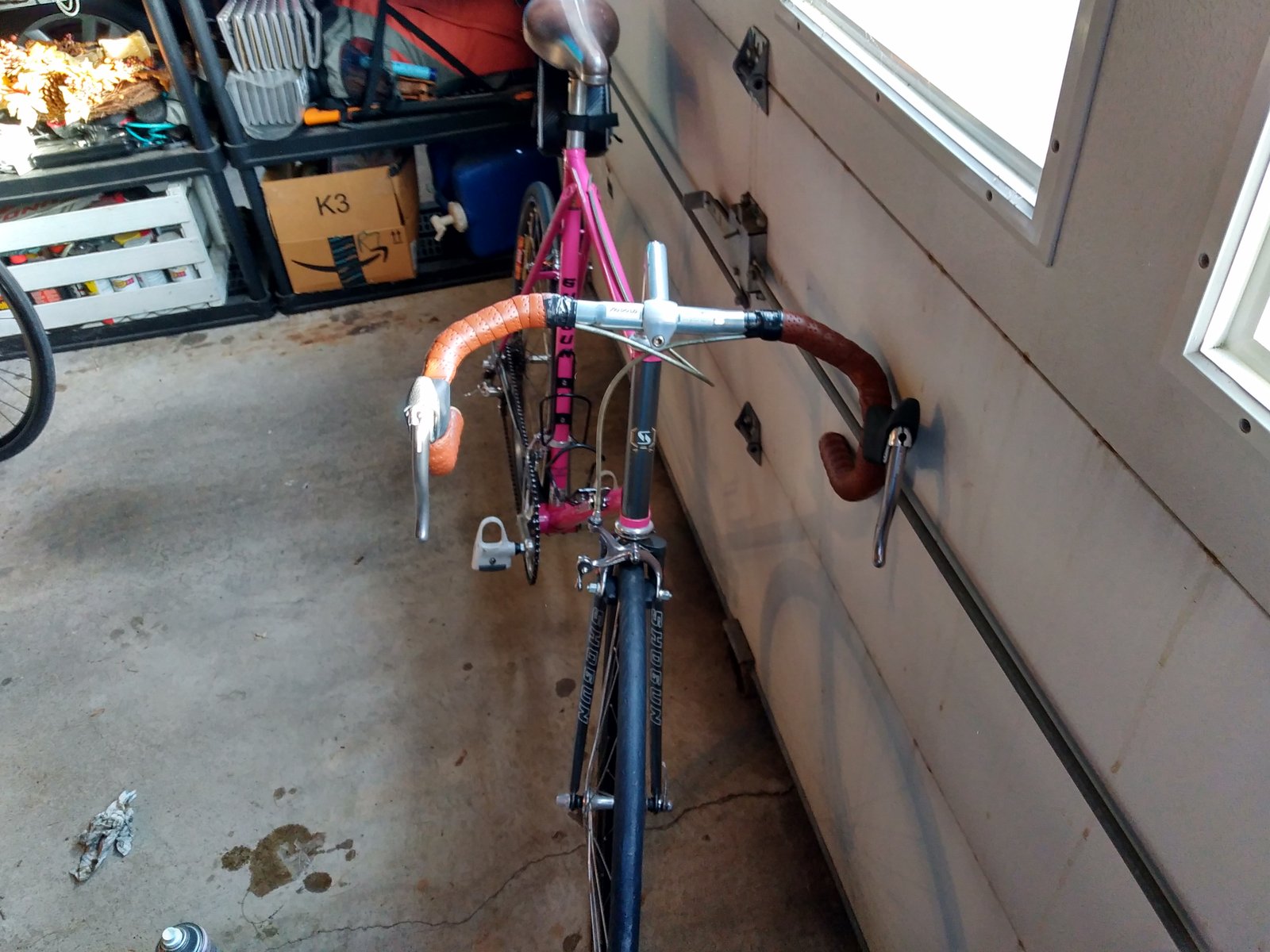
The bike had a couple of additions. If you look close on the down tube there is a flick stand - a little device we used to use to lock front tire and keep it from turning - we used these because we were too cool for kick-stands. It had a Cateye computer and the Shimano version of the "Look" clipless pedals.
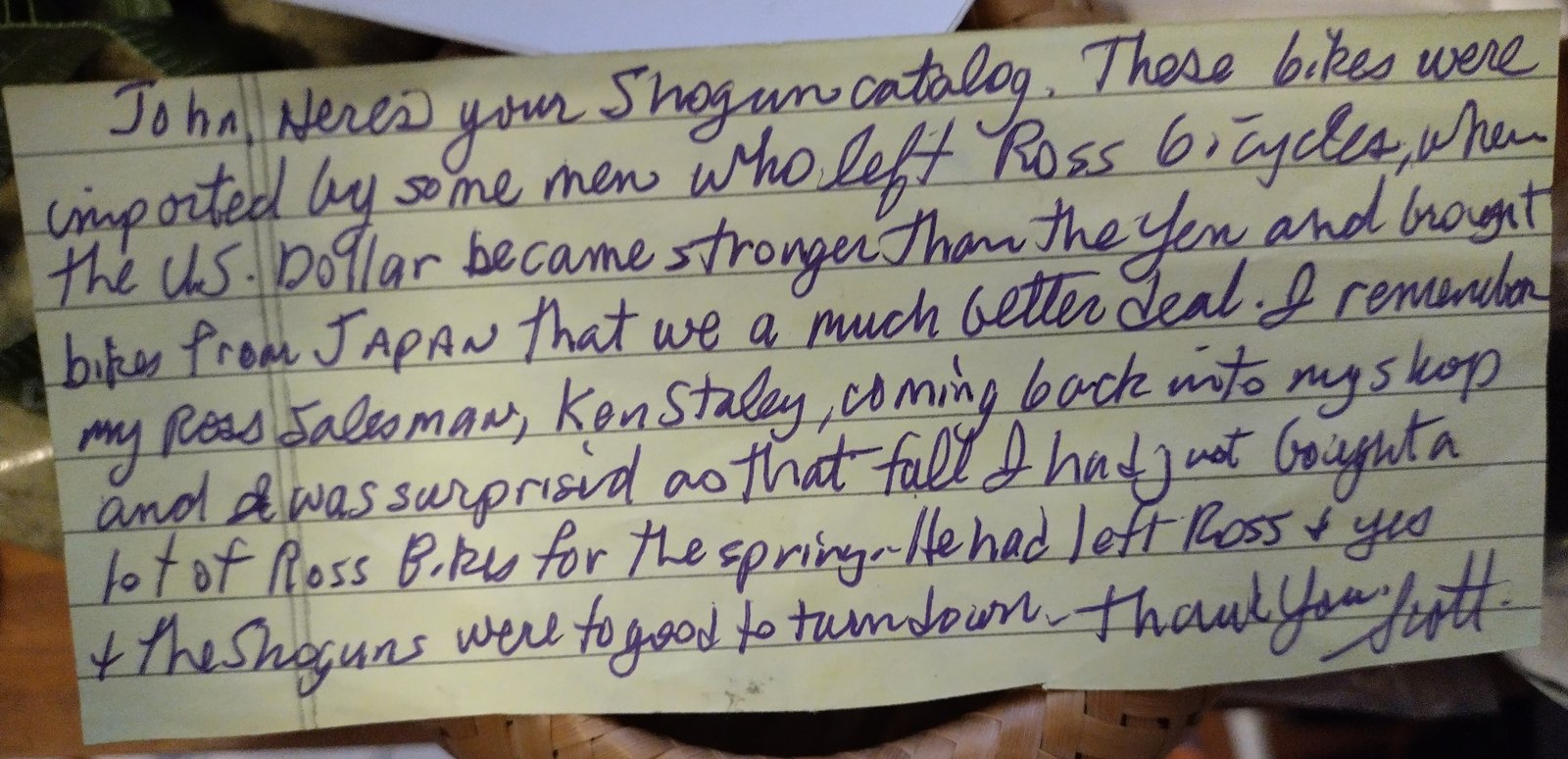
"John, Here's your Shogun catalog. These bikes were imported by some men who left Ross Bicycles, when the US Dollar became stronger than the Yen and brought bikes from Japan that were a much better deal. I remember my Ross salesman, Ken Staley, coming back into my shop and I was surprised as that fall I had not bought a lot of Ross Bikes for the spring. He had left Ross & yes the Shoguns were too good to turn down. Thank You, Scott."
This particular Shogun 1000 spent decades as a hanger queen in a friend's garage — Gary's 25-inch chrome moly frame in 1980s neon pink. It hadn't turned a wheel in years. When the opportunity to buy a Dave Scott Centurion on eBay ended in a FedEx shipping disaster — the bike damaged in transit, a chain stay dented, shipped back to Nebraska and never seen — Gary offered his Shogun as a gift. He'd been moving it around his garage for years, held onto it out of nostalgia, and wanted it to go to someone who would ride it.
The bike arrived weirdly identical to the lost Dave Scott. Same Shimano 600 groupset, same era Tange steel, same Nitto cockpit, same Sugino seatpost. Not a coincidence — Marui owned both brands and the same factories built them. The saddle was a Kashimax Intima, a close relative of the Selle Italia Turbo in shape and style, just a touch firmer. Everything was original except wear and time.
The rebuild had a clear mandate: keep the steel, keep the soul, and make it road-worthy for a 330-pound rider. Most retail bicycle manufacturers do not guarantee a bike for riders over 270 pounds. Specialized caps their carbon frames at 250. This meant the Shogun needed to be built up to handle 365 pounds total — rider plus clothing plus gear — with the biggest upgrades concentrated where the stress is highest: the wheels.
The bike went to Jorge at South Mountain Cycle in the Lehigh Valley. The work began in late October 2020 and was finished in early 2021, delayed — like everything that year — by Covid-era supply chain disruptions. Rims were on backorder. Parts trickled in across months. But when it came together, it came together right.
The goal was not to restore the Shogun to factory spec. It was to build a retro-modern road bike that could carry serious weight on club rides — climbing from an 11 mph average to 15 mph — while maintaining the character of a 1986 Japanese steel racing bicycle. Steel frame, more spokes, stronger wheels, stronger hubs. The few extra pounds of rotating mass are invisible beneath a heavy rider and they build stronger legs.
The frame stayed exactly as it was. The drivetrain stayed. The soul stayed. Everything that touches the road got upgraded.
| Component | 1986 Original | 2021 Rebuild |
|---|---|---|
| Frame | Tange Champion No. 2 Chromoly | Retained — the soul of the bike |
| Front Fork | Tange Chromoly, Investment Cast | Retained |
| Headset | Shimano New 600 EX | Retained — bearings serviced |
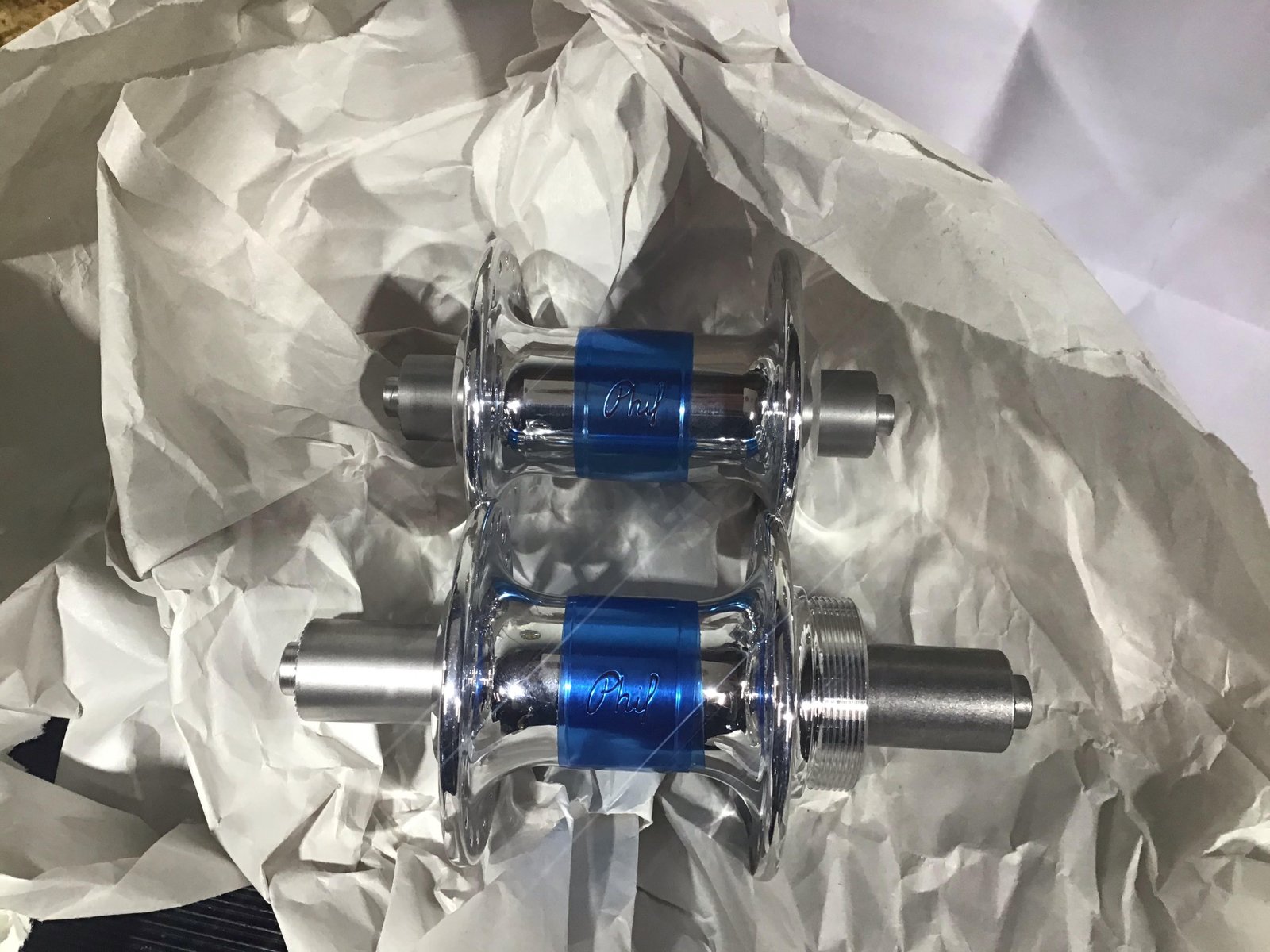
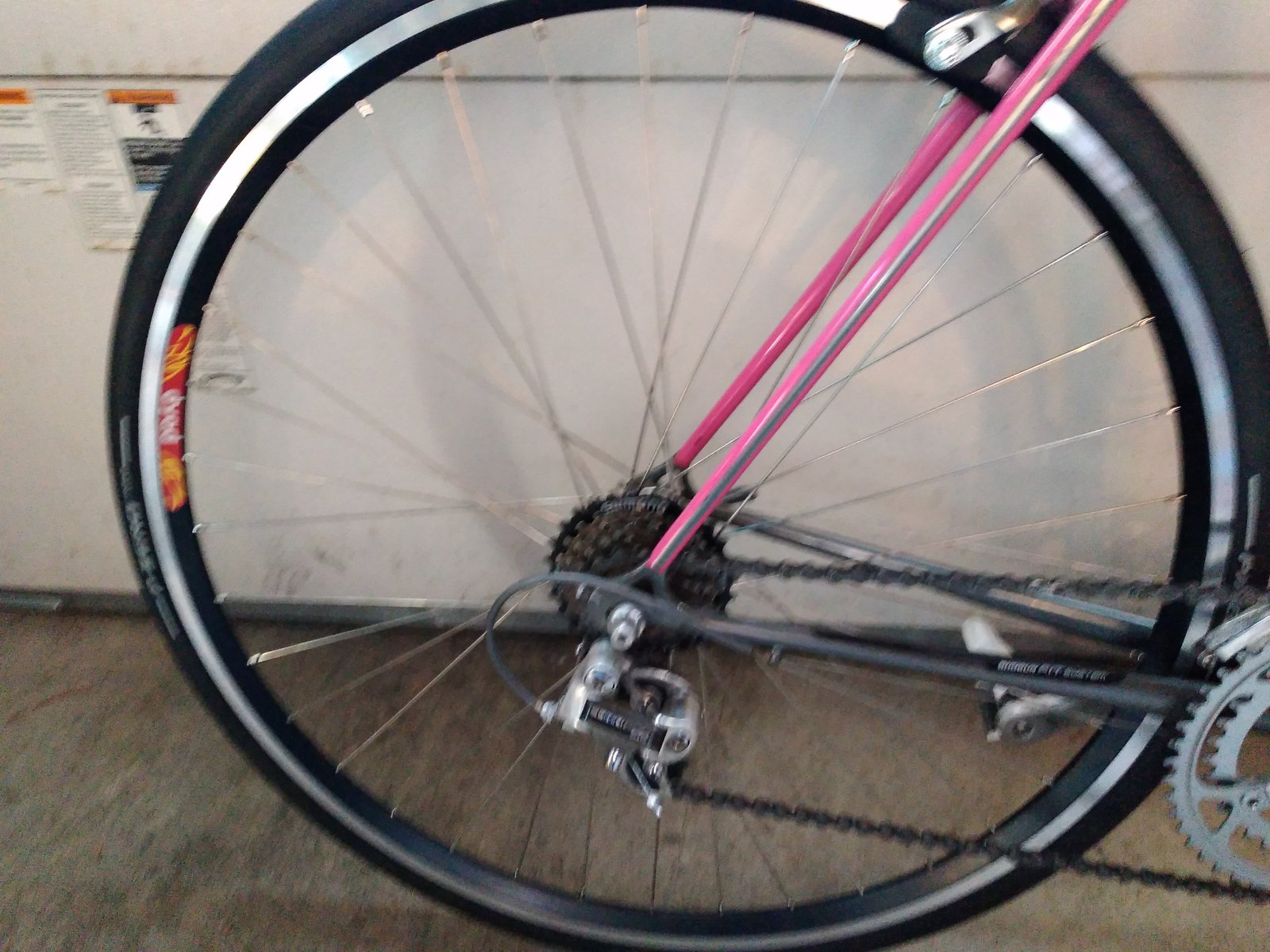
| Hubs | Shimano New 600 EX — 32h, Small Flange | Phil Wood — 40-hole, Silver |
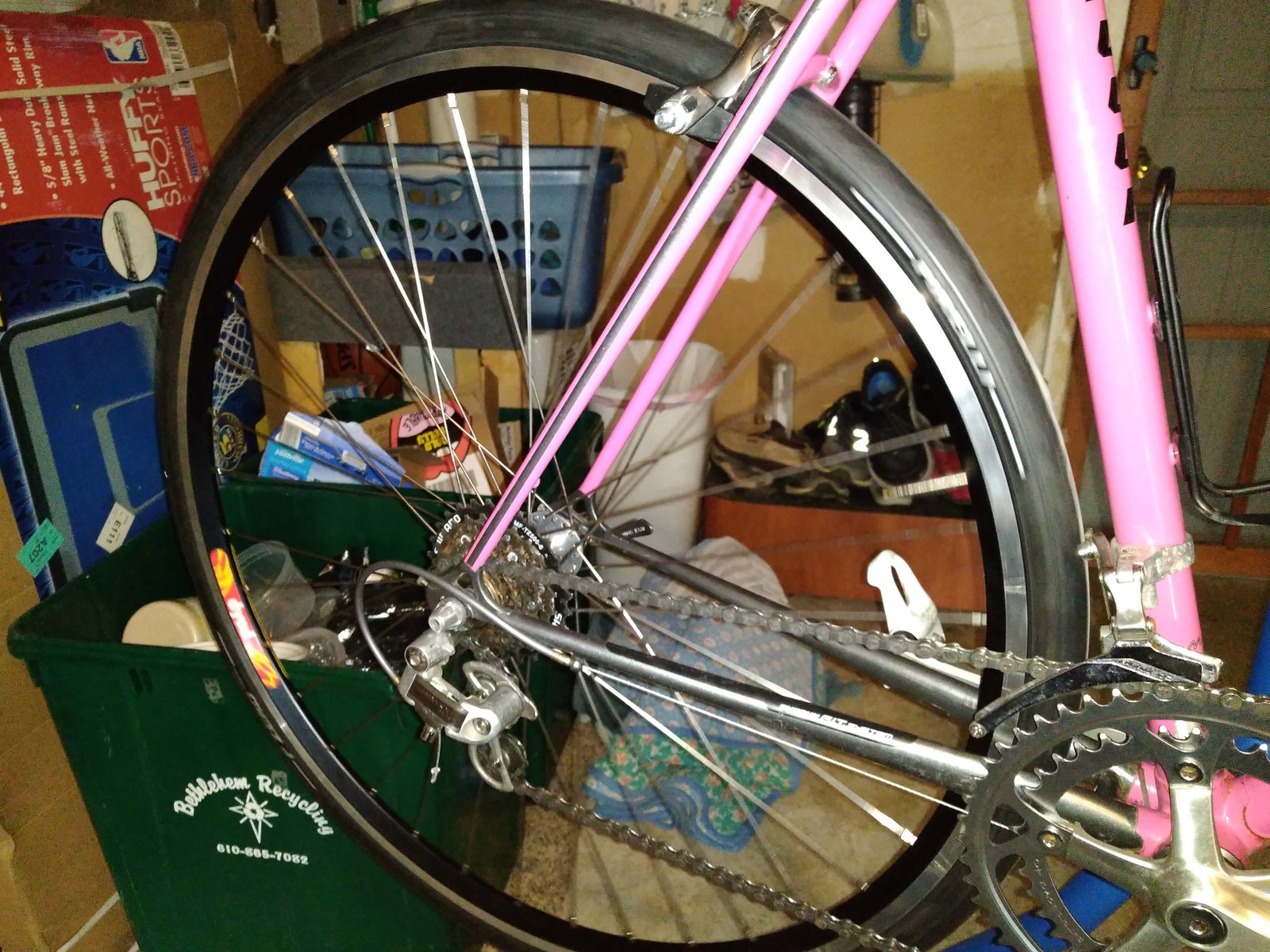
| Rims | Araya SA-540T — 32/32 Holes | Velocity Dyad — 40h Rear, 36h Front, Black |
| Spokes | Stainless Steel, 14 Gauge, 32ct | Silver, 40 Rear / 36 Front |
| Tires | 700 × 25C, 115 PSI | 700 × 25mm, Gum-wall |
| Brakes | Shimano New 600 EX, Side Pull | Retained — Jagwire cables & housing |
| Derailleurs | Shimano New 600 EX SIS | Retained — cables replaced |
| Shifters | Shimano New 600 EX, Downtube | Retained — friction & indexed |
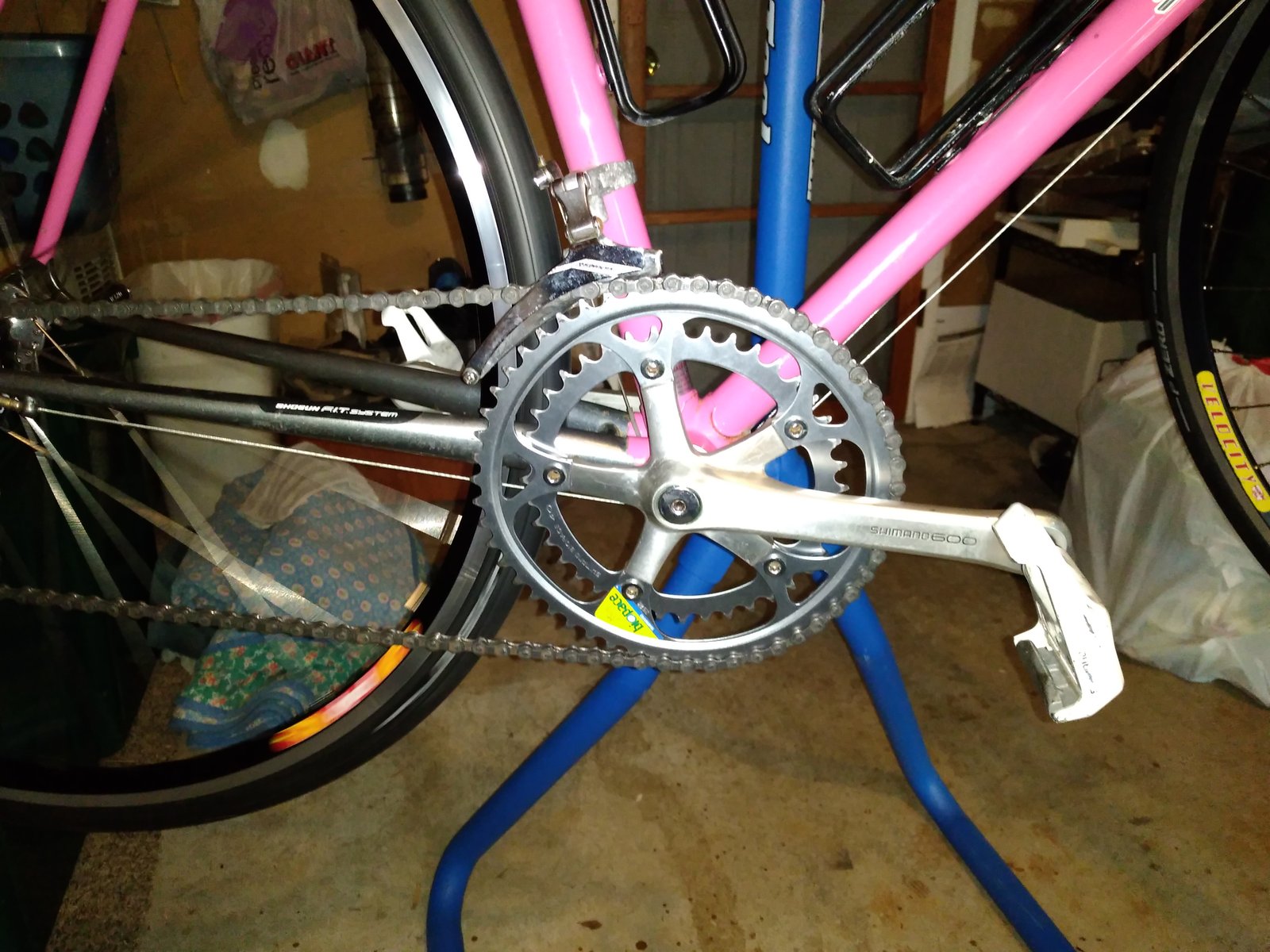
| Crankset | Shimano New 600 EX, 53-42T | Retained |
| Freewheel | 13/14/15/17/19/21T — 2×6 | Retained |
| Pedals | Shimano New 600 EX | Exustar PM86 — Clip-on / Flat / Clipless |
| Handlebar | Nitto B115, Shiny Tape | Retained bar — new wrap |
| Saddle | Kashimax Intima | Retained — Kashimax Intima |
| Seat Post | Sugino SP-KCL, 27.0 | Retained |
| Bottom Bracket | Shimano New 600 EX | Retained — bearings serviced |
From a few feet away, the finished Shogun looks stock — the neon pink frame, the gum-wall tires (sometimes it has gumwalls, the period-correct Shimano 600 drivetrain all read as original. The differences reveal themselves up close: the Phil Wood hubs with their unmistakable precision, the black Velocity Dyad rims with their higher spoke count, the silver spokes catching light in a denser pattern than any factory 32-hole wheel.
The Kashimax Intima saddle stayed. It was taken off for a while during the build but came back — it fits the bike, it fits the rider, and it ties the Shogun to its era. The Exustar PM86 pedals come and go. They are a practical concession to modern riding: clipless when I want to spin, flat for skills classes and hill climbs. The downtube shifters stayed exactly where Shimano put them in 1986. I upgraded to a 13/28 free-wheel so I can pretend to climb hills and the Bio-pace chain rings - which are not stock - are period correct and gives me something to talk about when we stop for coffee.
Where the bike was built to carry 200 pounds on 32 spokes per wheel, it now carries 330 pounds on 40 rear and 36 front, laced to hubs that were designed for tandems. The triple-triangle frame that made the Shogun stiffer than its Centurion cousins now earns that stiffness, translating every pedal stroke into forward motion without flex or complaint.
The case for steel is simple: it rides better. The difference between a 17-pound carbon bike and a 25-pound steel bike disappears beneath a 330-pound rider — do the physics, it just does not matter that much. What does matter is how the frame responds. Steel absorbs road chatter. Steel flexes and returns. Steel rewards a powerful pedal stroke with a feeling that the bike is jumping forward, alive under you, answering effort with motion.
Grant Peterson at Rivendell Bikes has spent decades making this argument more eloquently than I can. The Shogun 1000 makes it without saying a word — you just have to ride it.
The Shogun was built by South Mountain Cycle in the Lehigh Valley, Pennsylvania. The bike was designed to find the sweet spot between handling weight, building fitness, keeping up with club riders, and spending less than $1,500. It found every one of them.
Jorge at South Mountain Cycle did the wheel build and full service. The Phil Wood hubs, Velocity Dyad rims, and all bearing service, cable replacement, and assembly were his work. The delays were Covid's fault, not his.